
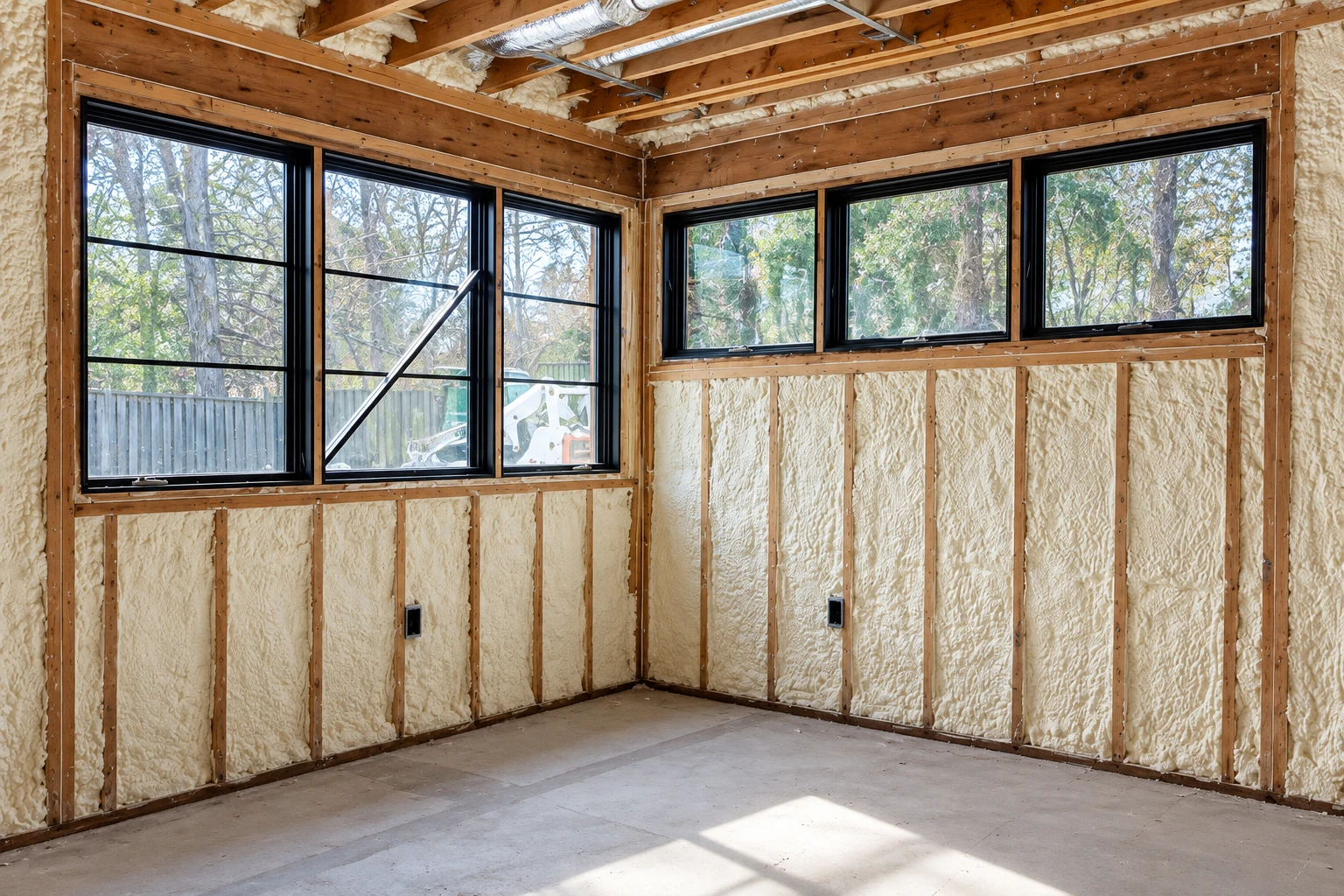
Basement insulation in Petaluma CA - a warmer basement, done in the right order
Cold floors upstairs and a damp chill downstairs? We deal with any water first, then insulate the walls so your house holds its heat.
Get your basement walls looked at
If you're planning a remodel, it's easier to insulate before the drywall goes up, so call (707) 238-6044 or use the form while the walls are still bare.
Is it worth insulating your basement walls in Petaluma?
Basement insulation in Petaluma puts insulation on your basement walls so the space holds its warmth through cold weather, and we do it only after any water coming through those walls is sorted out.
Most basement calls I get start with cold floors upstairs or a basement nobody wants to spend much time in. The price mostly moves with how much wall there is and whether a water repair has to happen first, and the schedule turns on that repair and on whether the city wants a permit for your job, so the estimate is where you get the number for your house. We're based in Petaluma and work in the cities around it, from Windsor and Santa Rosa down to Mill Valley and over to Sonoma and Napa. If your house sits on a crawl space instead of a basement, that's a different job, and our crawl space insulation page covers it.
Why Petaluma homeowners call us about their basements
I look at your basement myself
I come out myself to look at your walls and write the estimate. I started this business in 2017 on what my dad taught me in Petaluma attics and crawl spaces.
Licensed and fully insured
The state licensing board counts installing any insulation for heat or sound control as an insulation contractor's work. When you compare bids, it's fair to ask every contractor for their license.
Permits checked before we start
Petaluma's permit list names additions and renovations, not basement insulation, so we find out what the city wants and handle the permit when one's needed. If we're unsure, we ask the building office first.
Down in a basement, the order matters most, because insulation over a problem only hides it. Call (707) 238-6044 or send us a note about your basement to get started.
How we handle basement insulation, start to finish
First I look for water coming through your basement walls, because insulation on a wet wall won't do its job, and we want that sorted out before we insulate. Once the walls are dry, our crew clears them and seals up the gaps where pipes, wires and vents pass through the foundation, so the new insulation isn't fighting a draft. Then we put the insulation on tight to the wall with no air pockets behind it, and we cover any spray foam with an ignition-barrier paint or drywall, since foam can't be left bare. We clean up as we go, and you're left with a basement that holds its heat.
The foam choice is usually the big decision on a basement. Closed-cell foam insulation is the dense kind that blocks moisture along with heat, and open-cell foam insulation is the lighter, softer kind that does well in other parts of the house. Here's how they and rigid board stack up on a basement wall.
Closed-cell spray foam
This suits walls that have ever been damp, or a basement you plan to finish, because it bonds right to the concrete and blocks moisture as it insulates. It costs more than board, and on most basement walls I think it's worth it.
Rigid foam board
Board suits flat, dry walls and owners watching the budget, as long as every panel sits fully against the wall with no air gap behind it. The edges and seams get sealed tight, so careful fitting is most of the job.
Open-cell spray foam
It suits fewer basements than people expect, because it has to go on thicker to give vapor protection. If anyone offers it for your basement, ask how thick it'll be.
How do you know your basement needs insulation?
Cold floors upstairs
The rooms over the basement feel chilly underfoot all winter. Usually the basement walls are bare and losing heat, and every season you wait you're paying to warm the ground outside.
Damp spots on walls
Dark patches or a wet line along the concrete mean water is getting in somewhere. Waiting usually lets it soak whatever's stored against the wall, and it has to be fixed before any insulation.
Musty smell downstairs
A stale, earthy smell usually means moisture is hanging around, sometimes in old fiberglass or cardboard boxes against the wall. Left alone, it tends to work its way into everything stored down there.
Drafts around pipes
Cold air near where pipes, wires or the dryer vent go through the wall means there are open gaps. Every winter they stay open, warm air slips out and cold air creeps in.
What happens after you call us about your basement?
Call and book my visit
Once you call or send the form, we set a time for me to come out. I check your walls for water, explain what I see and give you an estimate.
Permit if needed, then install
If a permit's needed, Petaluma issues some within a few days, but most take a few weeks or even several months. After that, our crew lead and installers do the work.
Walk the finished basement together
When the crew's finished, I go over the basement with you. We don't call it done until you've seen the work and had your questions answered.
Basement insulation questions
These are the questions I hear most when I'm standing in a Petaluma basement. If yours isn't here, give us a call and ask about your own walls.
Should I insulate my basement walls or the ceiling?
Insulate the walls, in most cases. A basement is tied more closely to the living space above it than to the outdoors, so it works best treated as part of the heated house, and wall insulation is still the better plan even if you don't heat the basement.
What is the best insulation for a damp basement?
Closed-cell spray foam, which the U.S. Department of Energy's basement guidance rates as the best moisture control of any interior foundation insulation. That guidance also warns that fiberglass or cellulose against a basement wall can soak up a lot of moisture and stay damp. It says plastic sheeting over fibrous insulation can trap moisture inside the wall, and points to kraft-faced batts or latex paint on the drywall for below-grade walls instead.
How do I know if my basement walls are too wet to insulate?
If you see leaks, damp patches or wet walls, they're too wet, and that water gets fixed before any insulation goes in. That means repairing the leak and getting rain and runoff headed away from the foundation walls, so plan and budget that repair as step one.
How much does basement insulation cost in Petaluma?
The cost comes down to how much wall you have, what shape it's in and which material goes on it. Closed-cell foam costs more than rigid board, a wall crowded with pipes and wires takes more sealing, and a basement packed with storage takes longer to clear. The estimate gives you the number for your basement.
Do I need a permit to remodel and insulate my basement in Petaluma?
A basement renovation is the kind of work the City of Petaluma issues permits for, so plan on one if the insulation is part of a remodel. Getting it means an application, a fee and, in most cases, architectural or engineering plans reviewed by city staff. The city's remodel handout also says basements need at least one emergency escape or rescue opening, so if you're finishing the space, ask early how that applies to yours.
Will insulating my basement make the floors upstairs warmer?
Often, yes, because a warmer basement usually means warmer first-floor rooms too. If I think most of your heat is leaving through the top of the house, I'll say so, and attic insulation might be the better place to start.
Get a basement insulation estimate
Tell us about any past leaks, how you use the basement and what the walls are made of. We reply within one business day, and I come out for a free on-site estimate with no obligation.
Insulated basement walls
Other foam work we do
Closed-cell foam insulation
Planning to finish the basement someday? Closed-cell foam bonds to concrete and blocks moisture, so it's worth a look for any wall that's ever been damp.
Learn moreOpen-cell foam insulation
Open-cell foam is softer and lighter and works well in many walls and attics, but on a basement wall it needs extra thickness for vapor protection.
Learn more