
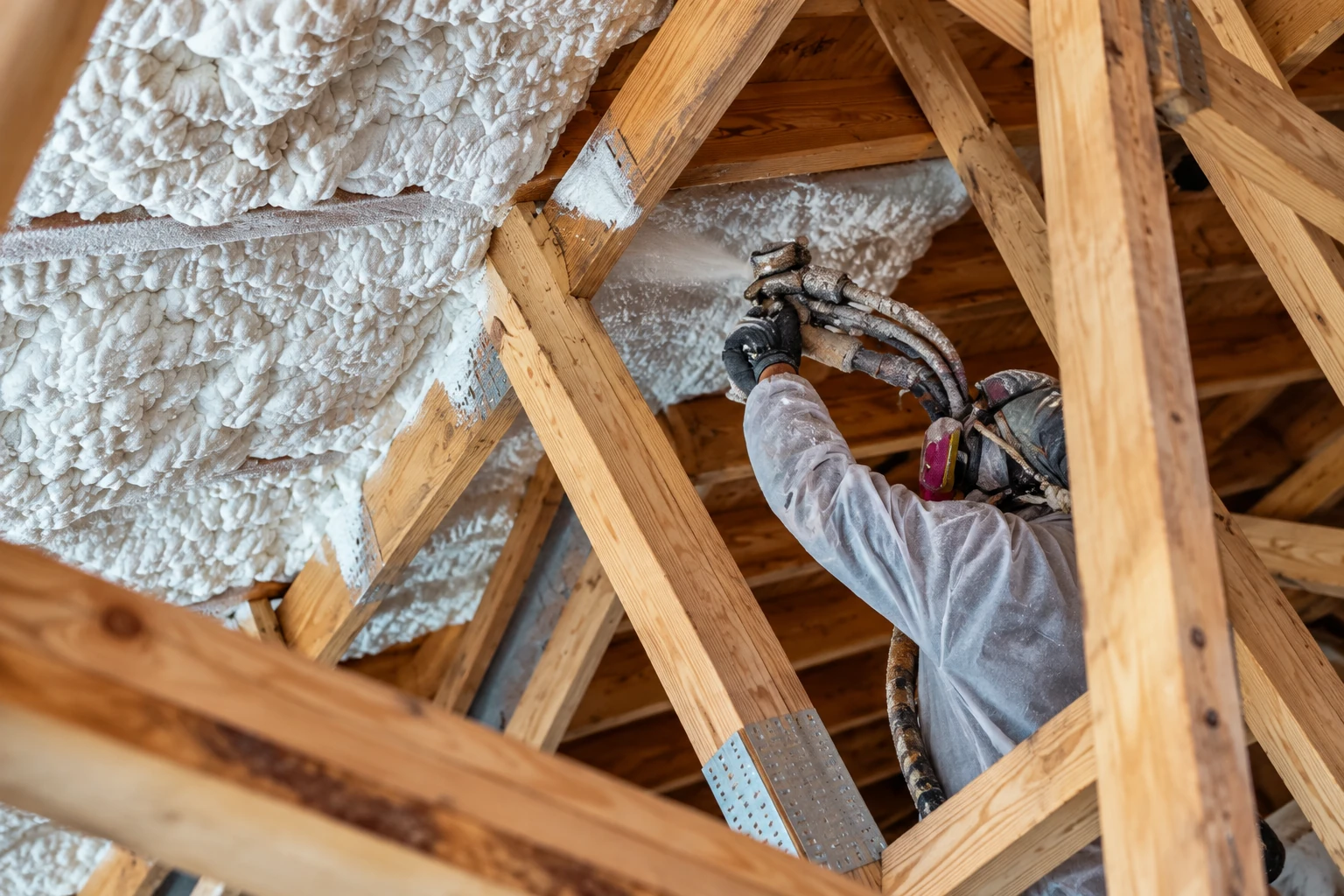
Open-cell foam insulation in Petaluma CA - the right foam for the right space
Hot rooms upstairs or a drafty room over the garage? We spray open-cell foam where it fits, so the space stays comfortable and quiet.
Call about your attic, walls or garage
We're open until 11 PM on weekdays and 10 PM on weekends, so you can call (707) 238-6044 after work or send the form whenever it suits you.
Is open-cell spray foam the right insulation for my house?
Open-cell foam insulation is a soft foam we spray into attics, roof decks and walls around Petaluma, CA. It slows heat moving through and fills gaps as it rises, so the rooms below hold the temperature you set.
Most people who call me have a hot bedroom upstairs, a drafty older house or a room over the garage nobody wants to sleep in, and they've heard spray foam fixes everything. It doesn't, but in the right spot it's hard to beat. The price comes down to how much area we spray, how many inches go on and whether old material needs insulation removal first. The schedule turns mostly on prep and on whether the city wants a permit. The estimate gives you the figure for your house.
Why Petaluma homeowners call Evergreen Petaluma Spray Foam Insulation for open-cell foam
The owner looks at your space
I learned this trade in Petaluma attics with my dad and started the business in 2017, and I still come out myself to write the estimate. You hear what's up there from the person who looked.
Licensed and fully insured crew
We're licensed and fully insured, so you aren't carrying the risk while our crew works in your attic. California's contractors board even keeps a separate license class for insulation work.
Work built to Petaluma's rules
Petaluma expects all work to meet the state building code and city ordinances, whether a permit is needed or not, and that's how we do it. Foam is hard to undo once it's sprayed.
Most of this job is getting the right foam into the right space, so set up a time for me to come take a look.
How we install open-cell foam insulation
I'll tell you plainly where open-cell fits in your house and where it doesn't, and then we do the work in the order my dad taught me. First we pull out any old insulation that's soaked or fouled, because spraying over it just seals the problem in, and then we cover floors and anything the overspray could reach. Next the crew sprays in passes so the foam fills around pipes and wires as it rises. They keep the edges as full as the middle, since thin edges are where heat slips through, and then they trim the excess and clean up before I come back to look.
Some jobs need more than one kind of work. A damp crawl space is no place for open-cell, so a crawl space vapor barrier is usually where we start down there. Property managers with an office, shop or rental building can ask about our commercial insulation, which follows the same order on a bigger building.
Under the roof deck
Spraying the underside of the roof suits attics where the ductwork or furnace lives, because it brings them inside the part of the house you heat and cool. If nothing runs up there, sealing the gaps and topping up the loose fill already in place usually wins on cost, and I'll tell you so.
Walls and the garage room
Open stud walls during a remodel, or a garage room you're finishing, take open-cell well, since the soft foam fills around wires and boxes and dulls noise too. Walls that get wet aren't a fit, so I check for that first.
How can you tell your house needs better insulation?
Hot bedrooms upstairs
The rooms under the roof bake on summer afternoons while downstairs stays fine. Usually the attic is thin on insulation or leaking air, and every summer you wait shows up on the power bill.
Cold room over the garage
That room never warms up, and the floor feels like stone in winter. The garage ceiling below often has little or nothing in it, so the room stays a spare you don't use.
Drafts you can feel
You feel moving air near can lights, outlets or the attic hatch. Those gaps leak air past whatever insulation is there, so adding more without sealing them mostly wastes money.
Flat or stained old insulation
Old insulation that's matted, stained or full of droppings has quit working and may be holding moisture or smells. Covering it traps the trouble, so it should come out before anything new goes in.
What happens after you call about open-cell foam?
I come out and look
Once you call or send the form, we set a time for me to come out. I climb into the attic or crawl space, explain what I see and write your estimate.
Our crew sprays the foam
Our crew lead and installers spray the foam. If you need a permit, plan ahead, since Petaluma issues some within a few days but most take a few weeks or several months.
We check it together
Before we call it done, I walk the space with you and look at the depth, the edges and the cleanup. You see what went in and where before we pack up.
Open-cell foam questions we hear
These are the questions people ask me most about open-cell foam. If your space doesn't fit neatly into one of them, call and describe it, and I'll tell you what I think.
Is open-cell or closed-cell spray foam better for my home?
Neither one wins everywhere, because each fits a different kind of space. As general figures, R-value, which is how well insulation slows heat, runs about R-3.5 to R-4 per inch for open-cell and about R-6 to R-7 for closed-cell foam, the denser kind that blocks moisture. The exact value varies by product, so compare the rating each quote names. Open-cell also lets water vapor through, so it can't serve as the vapor control layer the way closed-cell can when your wall or roof needs one.
Can open-cell spray foam go in a damp crawl space or basement?
Usually not, because open-cell foam can soak up liquid water and generally isn't a good fit below ground or anywhere that stays wet. Plan on a different material for that part of the house, and I'll tell you which one makes sense once I've seen it.
How long do I have to stay out of the house after spray foam insulation?
Usually about a day, since the foam's maker sets the wait before you go back in, and it's often around 24 hours, though it varies by product. Everyone, pets included, typically stays out while we spray and for a while afterward as the space airs out. Ask us the re-entry time, which is the hour you can come back in, for the exact foam on your job.
How do I find out if I need a permit for spray foam in Petaluma?
Ask Petaluma's Building Division, which answers permit questions at building@cityofpetaluma.org. Its list of work that needs a permit names covering the interior walls of an unfinished building or garage, so ask the city if your garage job ends with new wall covering. We find out what the city wants for each job and handle the permit when one is needed. If we're not sure, we ask the building office before we start.
How much does open-cell spray foam insulation cost in Petaluma?
There's no fair number until I've seen the space, so your price comes from the estimate I write on site. Besides the size of the area and the depth, the price moves with how easy the space is to reach and whether a coating or gypsum board has to go over the foam as a fire covering. That depends on the foam and the code, and not every spray foam needs one.
Does an attic sprayed with open-cell foam still need a way to get rid of moisture?
Yes. Building science guidance says any unvented attic or roof needs a way to remove moisture, and it treats that attic as conditioned, so it counts as part of the indoor space. We settle that in the plan before anyone sprays, and I'll walk you through how your house would handle it.
Get a straight answer on open-cell foam
Tell us which space you want insulated and whether it's below ground or damp, and we'll reply within one business day to set a time for me to come look. The estimate is free and on site, with no obligation.
What open-cell foam looks like
Work that often goes with foam
Commercial insulation
If you manage an office, shop or rental building, we can look at the whole building and sort out which spaces need foam and which need something else.
Learn moreCrawl space vapor barrier
When the crawl space under your house smells musty or stays damp, a vapor barrier over the dirt keeps ground moisture from rising into the floor above.
Learn more