
Home insulation in Petaluma CA - a house that holds its heat, attic to crawl space
Hot upstairs, cold floors or a power bill that keeps climbing? We look at the whole house and fix what's worth fixing first.
Get your whole house looked at
Call (707) 238-6044 or use the form, and mention any gas or oil furnace or water heater, because sealing a house tighter can pull its exhaust back indoors.
What does home insulation in Petaluma actually involve?
Home insulation in Petaluma means putting insulating material in your attic, under your floors, in the crawl space and along the rim joists, the framing that sits on the foundation, so your house holds its heat in winter and stays cooler upstairs in summer.
Most calls I get come from older, drafty houses where it's hot upstairs, the floors are cold and the power bill keeps creeping up, and the fix isn't always just more attic insulation. The price moves with the material, how much of the house we're doing and how hard the spaces are to get into, and the schedule turns on what we find up there and whether something has to be fixed or cleared out first. I'll give you your own number at the estimate, once I've seen it.
Why Petaluma homeowners call Evergreen Petaluma Spray Foam Insulation for home insulation
The owner writes your estimate
I come out myself, crawl through the attic and the crawl space, and write the estimate from what I see. You get a straight answer from the person responsible for the work.
A family trade, since 2017
I grew up handing my dad tools in Petaluma attics and crawl spaces, and in 2017 I started this business on what he taught me. The biggest lesson was doing the steps in the right order.
Licensed and insured before we climb
We're licensed and fully insured, and I'm happy to go over that at the estimate before anyone climbs into your attic. It's the first thing to ask any contractor who wants to work in your house.
If you're not sure where your house is losing heat, set up a walk-through and I'll show you what I find.
How we handle home insulation, start to finish
I start by looking at the whole house, the attic, the floors and the crawl space, because heat leaks out wherever it can and the attic isn't always the worst of it. Then we deal with anything that has to come first, like wet or moldy insulation, framing that's stayed damp, an attic with little ventilation or a vent dumping moist air inside, and old knob and tube wiring from before 1930, which can be a fire hazard once insulation touches it. After that we close the gaps around pipes, can lights and the hatch, which is called air sealing, and only then put the insulation in, keeping the eave vents clear and the edges as deep as the middle. Along the way I'll tell you plainly what's worth doing now and what can wait a few years.
If what's up there now is soaked, full of droppings or just worn out, insulation removal comes before anything new goes in, because a fresh layer over a bad one keeps the problem. Cold floors usually trace back to the space under the house, and crawl space insulation between the floor joists is usually what fixes them.
Air sealing plus blown-in fill
For most attics we seal the gaps first, then add blown-in insulation, which is loose fill blown through a hose, to an even depth. It costs less than foam and usually does the job just as well.
Spray foam where the ducts run
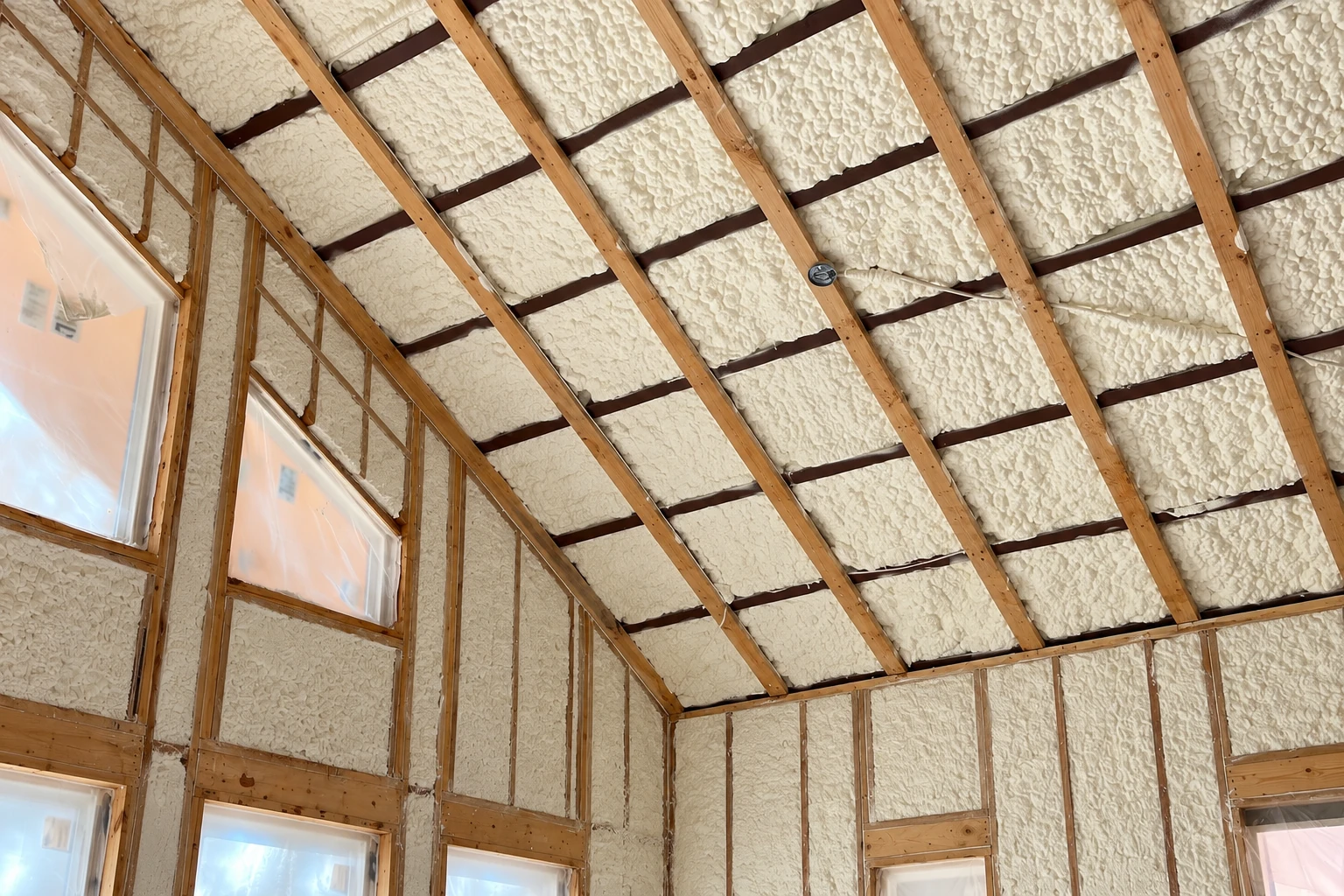
Foam costs more, but it seals air while it insulates, so it earns its price when your ductwork runs through the attic. Closed-cell foam, a dense foam that blocks moisture, also suits damp crawl spaces and rim joists.
How do you know your house needs better insulation?
Hot upstairs all summer
The bedrooms or the room over the garage bake while downstairs is fine. That usually means thin attic insulation or open gaps, and every summer you wait, the air conditioner runs harder.
Cold floors in winter
If your feet are cold even with the heat on, the floor above the crawl space probably has little or nothing under it. Waiting just means another winter of paying to heat the dirt.
Drafts around outlets and trim
You feel moving air near outlets, baseboards or the attic hatch. Those are air leaks, and insulation alone won't stop them, so the power bill stays high until the gaps get sealed.
Flattened or stained attic insulation
Old insulation that's packed down, stained or full of droppings has mostly quit working and may be hiding a leak or pests. Leave it and the damp, the smell and the bill all stick around.
What happens when you call us about insulating your Petaluma home?
Call and book a walk-through
Call or send the form and we'll set a time for me to come out. I check the attic and crawl space, talk through what I see and write your estimate.
Our crew does the work
Our crew lead and installers handle whatever has to come first, seal the gaps, then put the insulation in. If something unexpected turns up, we stop and talk it through with you.
Check the finished job together
Before we call it done, I check the work with you, up in the attic if you want to look. You see the depth, the clear vents and the sealed gaps yourself.
Home insulation questions we hear
These are the questions Petaluma homeowners ask me most often after a look in the attic. If your house doesn't fit any of them, call and ask about yours.
How do I choose the right insulation for my house?
Blankets, the rolls and precut batts, are the most common kind in American homes, while loose fill can get into any space without tearing out your walls or ceilings. That makes loose fill the usual pick for adding insulation to a finished house, and batts the easy pick for open framing like an unfinished garage. I'll tell you which fits each part of your house at the estimate.
How much does home insulation cost in Petaluma?
Insulation installation in San Francisco usually costs about $1,600 to $6,000 per job, and that's the closest published figure I can point you to. Where your job lands depends on the material, the size and how tricky the spaces are, and you'll get your own figure at the estimate.
How do I know if I need a permit to insulate in Petaluma?
The city's Building Division lists permits for covering the interior walls of an unfinished building or a garage, but its permit list doesn't name home insulation, so the list alone doesn't settle your job. A shed or playhouse under 120 square feet only skips a permit when it has no insulation or wall finish, so insulating one changes things. We find out what the city wants for each job and handle the permit when one's needed, and if it isn't clear, we ask the Building Division at building@cityofpetaluma.org before we start.
What should I do if my attic has vermiculite insulation?
Leave it alone, because disturbing vermiculite can release asbestos fibers that are harmful to breathe. It looks like loose pebbles, usually gray-brown or silver-gold, so tell us if you've seen that when you call. If you decide to have it removed, the EPA recommends a trained, accredited asbestos abatement contractor who's separate from whoever assessed it, so if I'm the one who spots it, someone else should take it out.
Does an insulation contractor need a license in California?
Yes, California has its own contractor license class for installing insulation to control temperature or sound. The only exception is minor work under $1,000 that needs no permit, done by someone who employs no one, so a crew working in your attic should be licensed.
How much can insulating my attic and crawl space save on my power bill?
On average across the country, insulating attics, floors and crawl spaces and sealing air leaks can save up to 15% on heating and cooling costs. That number counts the sealing and the insulation together, so plan them as one job instead of skipping the sealing to save money.
Get a free home insulation estimate
Tell us what's bothering you about the house and where the attic hatch is, and we'll reply within one business day to set up a visit. I come out and give you a free estimate on site, with no obligation.
Insulation work, up close
Other insulation work you might need
Insulation removal
Old insulation that's been soaked by a roof leak or nested in by rodents usually needs to come out, and the attic cleaned, before anything new goes in.
Learn moreCrawl space insulation
If the floors stay cold all winter, insulating under them from the crawl space keeps your heat in the rooms where your family actually lives.
Learn more